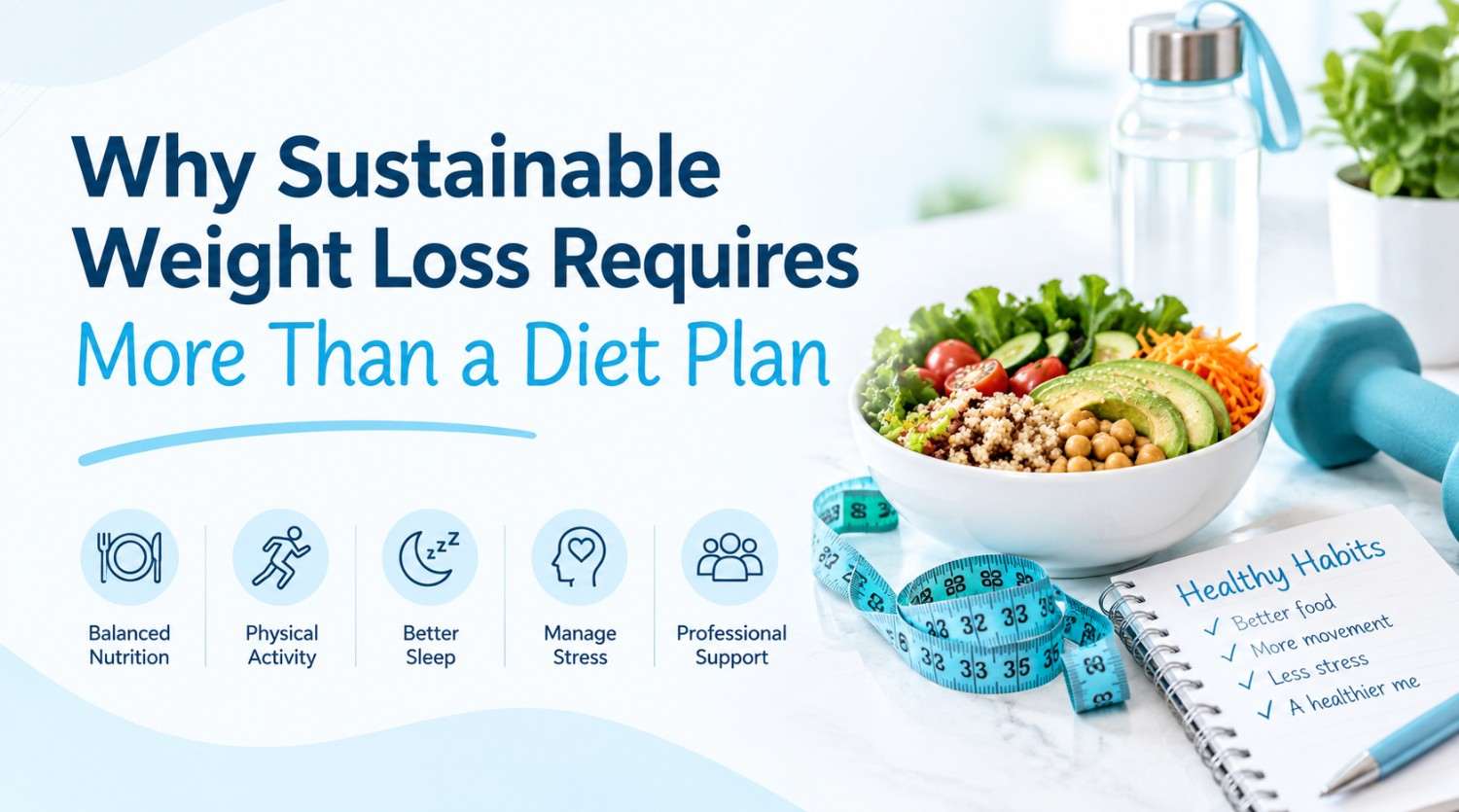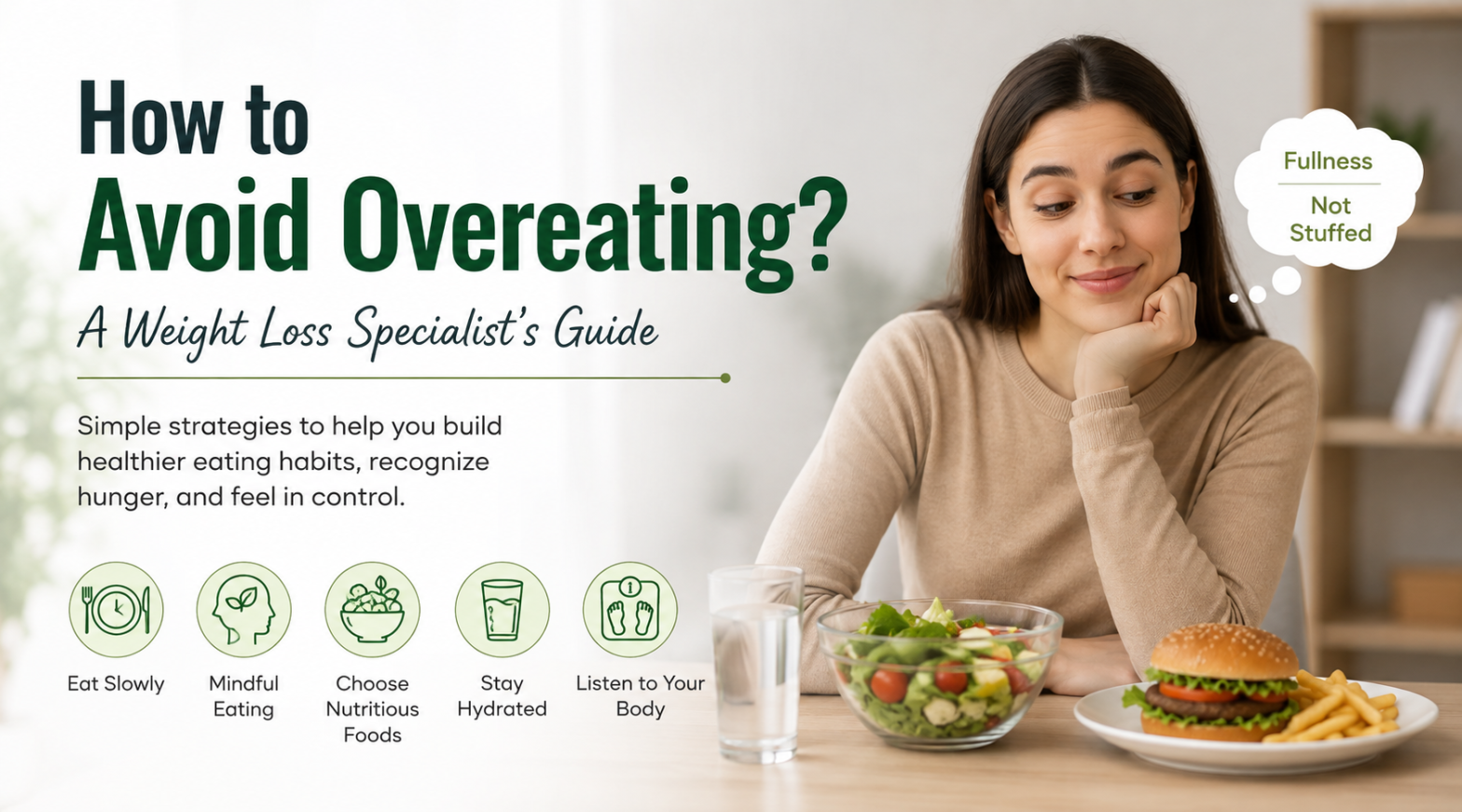
Summary: There are many ways to stop overeating. Eat slowly and create an environment that supports your goals. Learn to recognize hunger and fullness.
———————————————————————————–
Do you often wonder “why did I eat so much?” after finishing a meal? You are not alone. Overeating can happen to anyone. Busy schedules, stress, large portions, distractions, and even eating too quickly can make it easy to consume more food than your body needs. If you are already trying to lose weight or planning to consult a weight loss specialist, it is useful to know how to control overeating. Relax! You do not have to follow a strict diet or give up your favorite foods. Small, consistent changes to the way you eat can help you become more aware of hunger, enjoy your meals, and develop healthier habits.
A Weight Loss Specialist’s Tips for Managing Overeating
Have Balanced and Satisfying Meals
Constant hunger can make overeating more tempting. As a trusted nurse practitioner clinic, we recommend cooking meals that keep you satisfied for a long time. Include good sources of protein, vegetables, fibre-rich foods, healthy fats, and appropriate portions of carbohydrates. Planning balanced meals can also reduce the temptation to reach for convenient foods when you are extremely hungry.
Eat Slowly and Pay Attention to Your Food
If you eat too quickly, it may be difficult to understand when you are becoming comfortably full. Put your forks down between bites, chew thoroughly, and enjoy the flavors of your meal. Try eating without watching TV or scrolling through your phone. These simple approaches can help you become more aware of your eating habits.
Create an Environment That Supports Your Goals
Your surroundings can have a surprisingly strong influence on how much you eat. If you keep unhealthy snacks within reach, weight management may become difficult or time-consuming. Try making healthy choices convenient. Portion snacks into smaller containers, keep nutritious options easily accessible, and sit down when eating rather than grazing throughout the day.
Learn to Recognize Hunger and Fullness
Not every urge to eat comes from physical hunger. Sometimes you eat because you are bored, stressed, tired, or simply because food is available. Before you reach for a snack, pause and ask yourself: “Am I physically hungry or am I responding to an emotion?” There is no need to judge your answer. The goal is to become more aware of why you are eating.
We hope you find this blog useful. However, if you want us to answer your specific queries, please feel free to get in touch without delay.